Direct answer
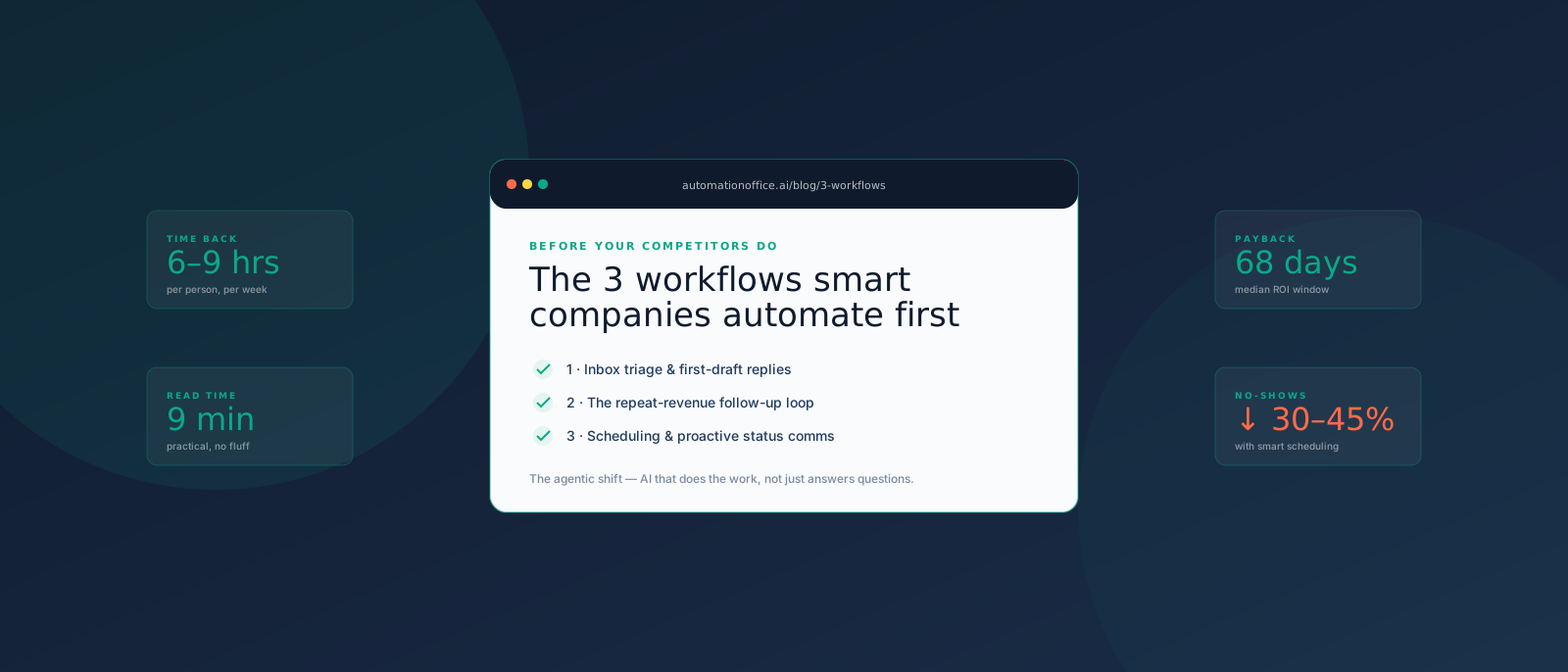
The three workflows service businesses automate first, in order: (1) clear the inbox — triage and draft every reply; (2) stop the revenue leak — chase every renewal, recall and overdue account automatically; (3) fill the calendar — reminders, rebookings and status updates that send themselves. Together they hand back 6–9 hours per person per week and pay back in about 68 days. The catch isn't the tech — it's that your competitors are scoping the exact same three right now.
The shift, in one line
For three years, business AI was a chat box. You asked, it answered — and the actual work still landed on a person.
The newest models changed that. They don't wait to be asked. They read what's happening in the tools you already use, do the work, and hand it back for a quick yes. That's the real story behind the reel — and it's why this is suddenly in reach for a ten-person business, not just a tech giant.
The companies pulling ahead aren't asking AI questions.
They're letting it do the work.
Here are the three jobs they hand over first — in the order that works.
Clear the inbox
Every email read, sorted and answered in your voice — ready for a one-tap approve. The urgent stuff never gets buried, and your team stops writing from a blank page.
6–9 hrs per person, back every week
Stop the revenue leak
The follow-ups that quietly cost you money — overdue accounts, lapsing renewals, customers due back, deadlines slipping — chased automatically, every time. The follow-up a busy human skips is the one the AI never forgets.
~68 days to pay for itself
Fill the calendar
Reminders, confirmations and reschedules send themselves. Empty slots get backfilled from the waitlist, and customers know where things stand before they have to ask.
30–45% fewer no-shows
The part that's specific to you
The three workflows are the same everywhere. How they'd work in your business isn't. Want to see exactly how we'd apply them to yours? Fill out a short form and get your free automation report — we'll send you a custom AI automation strategy report: your highest-ROI workflows, in priority order, with the numbers attached. Get your FREE automation report →
Do it this quarter and you spend next quarter ahead.
Do it next year and you start a year behind.
None of this is exotic — that's the point. The advantage isn't discovering the idea, it's the timing. Recovered time and collected revenue compound, and you only have to make the move once.
How we roll it out
01 · LISTENAI draftsIt writes, sends nothing. You watch and tune the voice.
02 · APPROVEOne-tap yesDrafts go live with a quick human sign-off on each.
03 · AUTOIt runs itselfRoutine work auto-sends. You handle the exceptions.
Frequently asked.
What does it mean that AI is now "agentic"?
The previous generation of AI answered questions when you asked them. The current generation reads context from your existing tools, drafts a multi-step action, and queues it for your approval — without being prompted each time. The practical difference for a business is that the AI now does the work, rather than waiting to be asked about it. That's the line the newest frontier models crossed, and it's what makes back-office automation viable for small teams.
Which workflow should we automate first?
Start with the simplest high-volume workflow, not the most painful one. For most Australian service businesses that's inbox triage — categorising, summarising and drafting replies. It's low-risk, it touches every part of the business, and it proves the approval model before you extend automation to revenue-critical workflows like renewals, recalls or arrears.
Will automation replace our staff?
In practice, no. Across the category the pattern is recovered time, not reduced headcount — property managers do leasing instead of arrears chasing, practitioners see patients instead of rebooking them, bookkeepers do advisory instead of data entry. The work that requires judgment, relationships and accountability stays with the human; the drafting and chasing goes to the AI.
How quickly does it pay back?
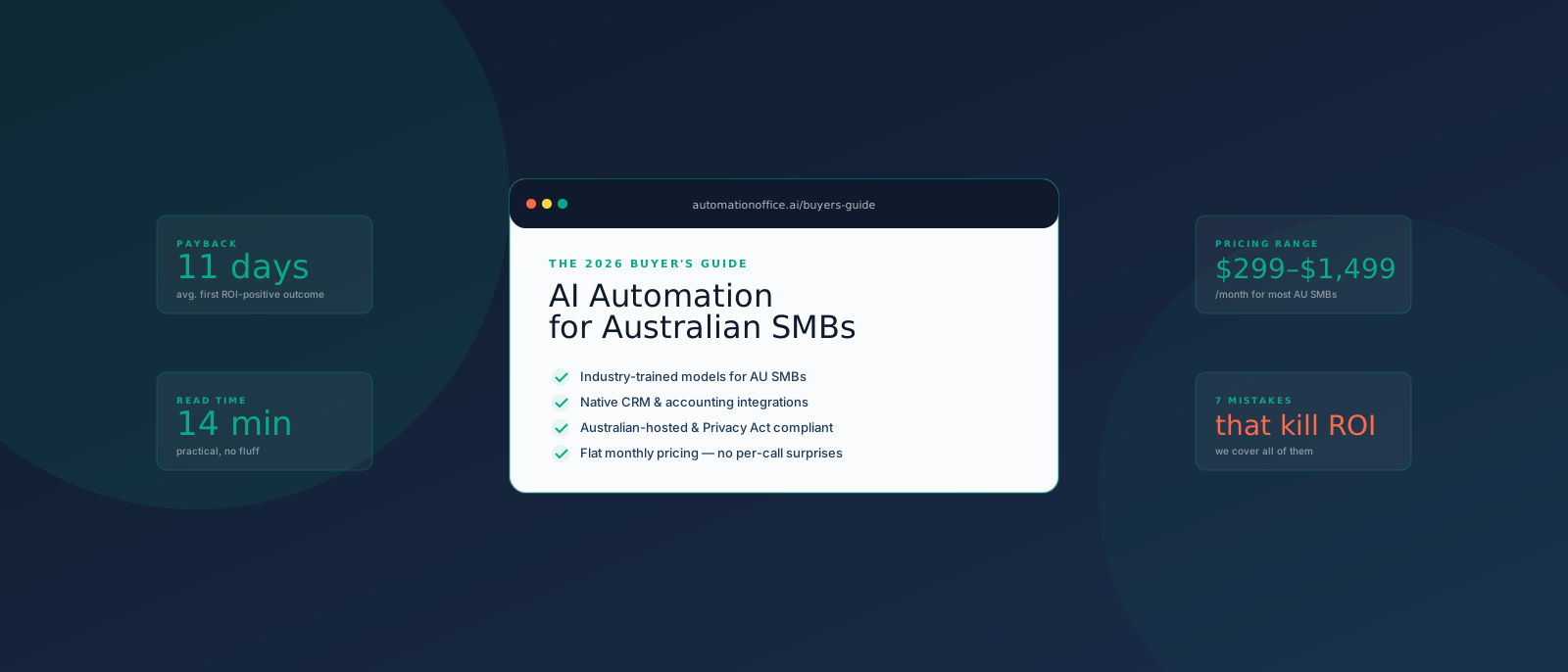
The category median time-to-payback for SMB deployments is roughly 68 days — measured from kickoff to documented monthly savings exceeding the monthly cost. The fastest returns come from the repeat-revenue follow-up loop, because that workflow recovers money you've already earned but not yet collected or rebooked.
Is it secure and compliant for an Australian business?
Yes. AutomationOffice.ai runs on Australian infrastructure with controls aligned to the Australian Privacy Principles, real estate trust-account rules, and AHPRA guidance for health communications. The AI reads and drafts; a named human still approves anything client-facing.
Want to know which workflow pays back fastest for you?
Get your FREE automation report and we'll send you a custom AI automation strategy report — the highest-ROI workflows mapped to your specific stack and numbers, in priority order. Whatever your industry, we'll tell you candidly which one to automate first and what it's worth.
Get your FREE automation report →