Customer Comms
The problem
Plumbing & Gas runs on responsiveness, and the inbox is where it's won or lost.
A dispatcher can lose hours a day reading, sorting and replying to the same kinds of messages — and the urgent one still slips through.
None of this is a people problem. Your team isn't slow — they're carrying repetitive, low-judgment work that quietly crowds out the things only a human can do. That's exactly the work agentic AI is now good enough to take on.
What good looks like
Agentic AI reads every incoming message, categorises it, summarises the thread and drafts a reply in your voice, then queues it for a one-tap approve. Nothing sends without a human saying yes.
In practice, that means the system:
- Sorts and prioritises every inbound message the moment it lands
- Drafts a reply in your brand voice, ready for a one-tap approve
- Escalates the genuinely urgent so nothing important gets buried
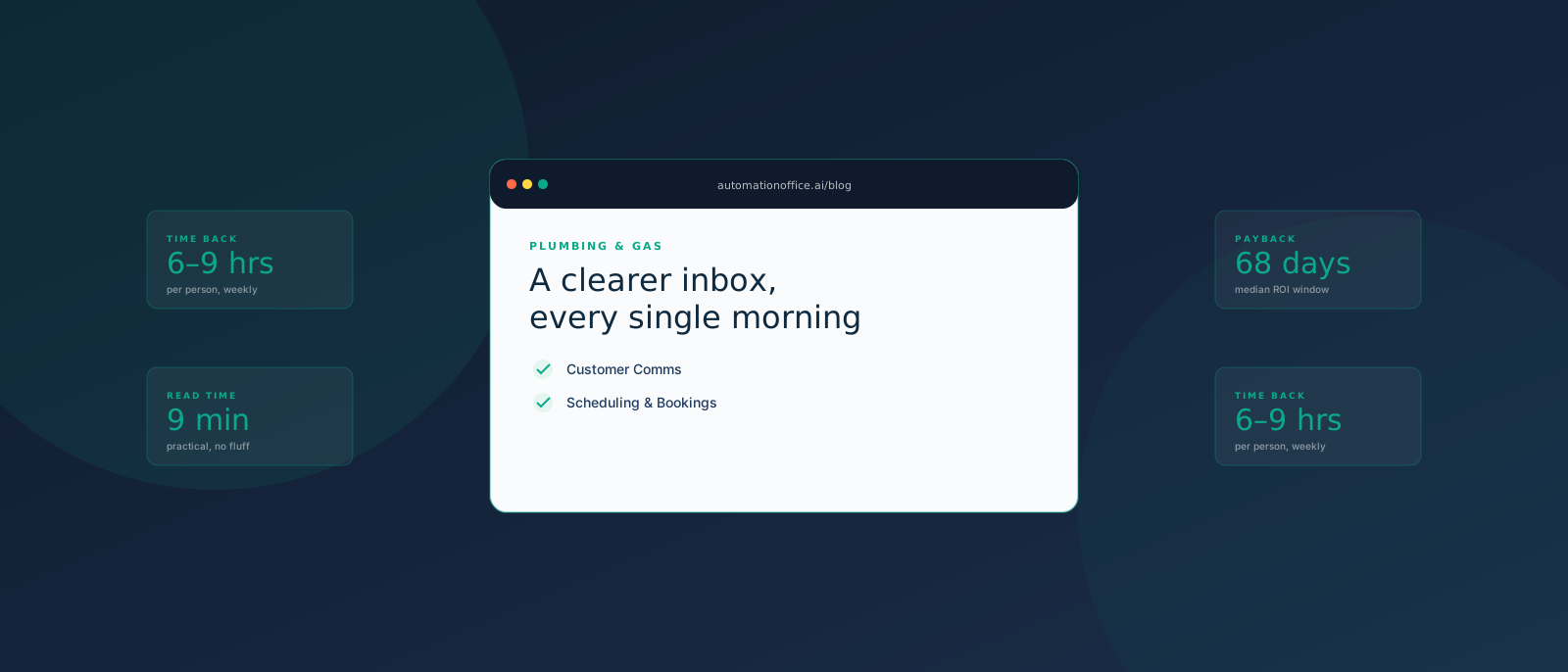
Per person, weekly. That's the range plumbing & gas operators report once this workflow is live and trusted.
What it looks like in a typical week
Picture a normal Monday. By the time your dispatcher sits down, the weekend's messages are already sorted, summarised and drafted — they read, tweak and approve in a single pass, and the morning that used to vanish into the inbox is handed back.
How it works on your stack
Pointed at ServiceM8, AroFlo, it has the context to draft accurately — pulling the right callout queue detail into each reply instead of leaving your team to look it up.
Crucially, a human still owns every decision that matters. The AI drafts and chases; your dispatcher approves anything client-facing. You get the speed without giving up control or accountability — and every action leaves an audit trail you can check.
Setup is light. There's no rip-and-replace: the AI sits across the tools you already run, so your team keeps working the way they know while the admin quietly lifts off their plate.
What it's worth
For a plumbing & gas business, the return shows up two ways: hours your team stops spending on repetitive admin, and callouts and quotes that stop slipping through the cracks. Most operators feel it within the first few weeks.
It's also a one-time move — the time you recover compounds. You bank it and build on it, quarter after quarter, while competitors who wait keep doing the work by hand.
And because a person still approves the output, the quality of what goes to your clients doesn't drop — if anything, it gets more consistent, because nothing depends on whoever happens to have a spare ten minutes.
Across SMB deployments, from kickoff to documented monthly savings exceeding monthly cost.
Where to start
Run a short listen-only phase first, where the AI drafts but doesn't send, so your team can tune the tone and trust the output. Give the workflow one named owner. Then go live with one-tap approval, and expand from there.
Whatever your industry, the sequencing beats the speed — automate the simplest high-volume workflow first, prove it, then layer on the rest. The businesses that win with this aren't the ones with the biggest budget; they're the ones that started.
Every plumbing & gas operation runs a little differently. Get your FREE automation report and we'll send you a custom AI automation strategy report — your highest-ROI workflows, in priority order, with the numbers attached. Get your FREE automation report →